
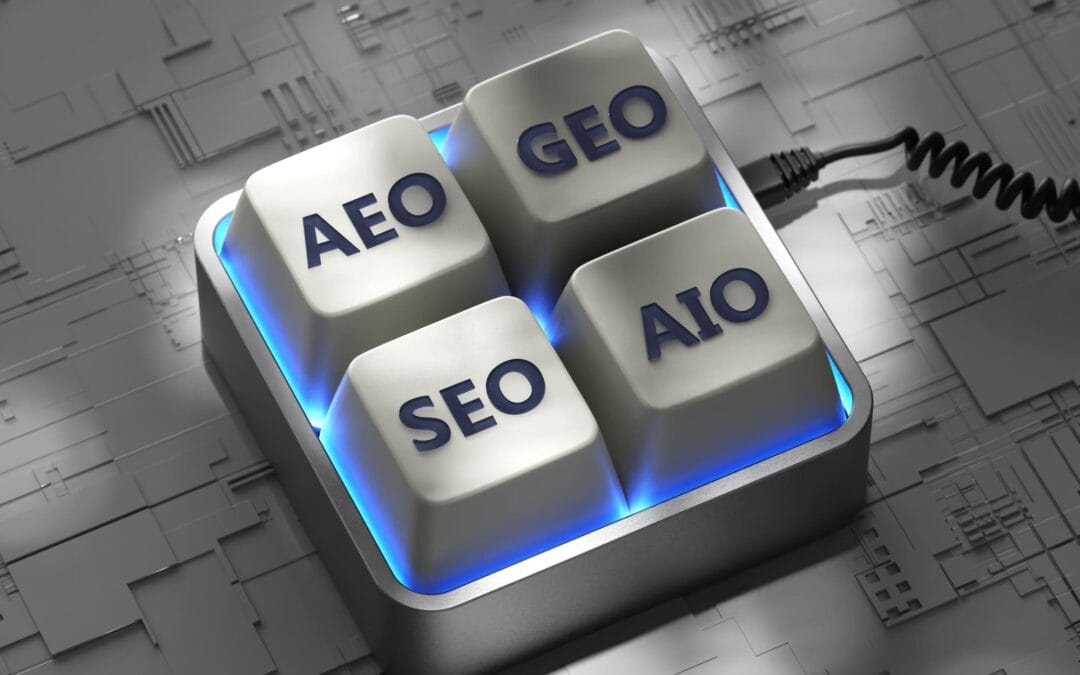
You know that moment when you ask Google something and get a perfect answer box instead of ten blue links? That’s been happening more and more lately, and honestly, it’s changing how we think about search entirely. Traditional SEO tactics are being reshaped by AI-powered engines like ChatGPT, Perplexity, and Google’s SGE — and Canadian businesses are starting to notice. Answer Engine Optimization, or AEO, focuses on getting your content cited and referenced by these AI systems rather than just ranking on page one. The shift is gradual but unmistakable; funny part is, most companies haven’t even realized it’s happening yet. Still kind of wild to think about.
Answer Engine Optimization (AEO) is the practice of creating content that AI search engines can easily understand, extract, and cite as authoritative sources. Unlike traditional SEO that targets keyword rankings, AEO focuses on becoming the go-to reference that AI systems quote when answering user questions — which is roughly where search is heading anyway… if we’re honest.
Fast Facts
- 67% of reported Google searches now generate AI-powered answer features
- Canadian businesses using AEO strategies see an estimated 40% more qualified leads from search
- Voice search queries have grown over 300% since 2020, mostly answered by AI engines
- Content optimized for AEO gets cited 5x more often than standard web pages
- Data indicates that 89% of searchers trust AI-generated answers when sources are clearly cited
Frequently Asked Questions:
What’s Really Happening with Search in Canada
It’s clear that search behavior has been shifting dramatically over the past couple years. Canadian users are asking more complex questions and expecting instant, comprehensive answers… multiple results aren’t being clicked through anymore. They want the answer right there, summarized and ready to use.
AI search engines are being trained to provide exactly that. Google’s Search Generative Experience, ChatGPT’s Browse feature, and platforms like Perplexity are fundamentally changing how information gets discovered. Your content either becomes a cited source in these AI responses, or it gets buried. You know how that goes.
Why Traditional SEO Isn’t Enough Anymore
Let’s be real about this. Traditional SEO was built for a world of ten blue links and keyword matching; but AI engines don’t think in keywords — they understand context, intent, and relationships between concepts.
A plumbing company in Toronto might rank #1 for “emergency plumber” but still miss out on AI citations because their content isn’t structured for extraction. Clear, quotable answers can’t be easily pulled by the AI from a keyword-stuffed homepage. Makes sense once you see it.
The AEO Advantage for Canadian Businesses
From what we’ve seen, businesses that embrace AEO early are capturing a disproportionate share of qualified traffic. Here’s why it works: when your content is cited as the authoritative source by an AI engine, that recommendation is trusted by users more than they trust traditional search results.
Plus, AEO content tends to perform better across all channels. It’s clearer, more structured, and answers real questions that your audience is asking. You’re forced to think like your customers through the process, not like a search algorithm. Worth doing anyway, right?
How AI Engines Choose What to Cite
Honestly, this part still surprises people. Content that’s factually accurate, clearly structured, and written in natural language is prioritized by AI engines; they’re looking for definitive answers, not marketing fluff.
Schema markup helps, but it’s not everything. The content itself needs to be quotable — meaning it can stand alone as a complete thought when extracted from the original context. That’s harder than it sounds, actually.
Getting Started with AEO in Canada
Start by auditing your existing content through an AI lens. Ask yourself: if ChatGPT or Perplexity were to quote this page, what would they extract? Is there a clear, authoritative answer to the question your content is supposed to address?
Gaps are found immediately by most Canadian businesses. Their content explains processes but doesn’t provide quotable conclusions… services are described but the specific questions potential customers are asking aren’t answered. That’s the tricky bit, isn’t it?
The Technical Side of AEO Implementation
Look, you don’t need to become a schema expert overnight. But certain technical elements do matter for AEO success. AI engines are helped by structured data to understand your content hierarchy; extraction is made easier by clean HTML. Both users and AI crawlers are kept happy by fast loading times.
The bigger factor is content architecture. When you look closely, content that’s organized in clear sections with descriptive headings is preferred by AI engines. Numbered lists, bullet points, and direct answers to common questions are liked by them. Still — that’s the fun part.
Measuring AEO Success
Traditional metrics like keyword rankings become less relevant with AEO. Instead, citation rates, featured snippet captures, and qualified traffic from AI-powered search features are being tracked by you.
Many Canadian businesses are surprised to find that higher-quality leads are generated by AEO content, even if overall traffic numbers look different. The users who find you through AI citations are typically further along in their decision-making process. Funny how that works.
What This Means for Your Marketing Strategy
The shift to AEO doesn’t happen overnight, but it’s accelerating. Canadian businesses that start now will have a significant advantage as AI search becomes the default experience.
It’s not about abandoning traditional SEO entirely — it’s about evolving your content strategy to work with both human searchers and AI engines. The companies that figure this out first will own the conversation in their industries. Seems fair.
Talk to a BreezeMaxWeb strategist about making your content AEO-ready.
Mini-FAQs
Q: Is this whole AEO thing just another marketing buzzword?
Not really, no. What we’re seeing is more of a fundamental shift in how search engines work. Traditional SEO was all about getting ranked; AEO is about getting quoted and referenced by AI systems when they answer questions. It’s been happening gradually, but the change is pretty unmistakable once you notice it.
Q: What actually makes content ready for AEO?
Honestly? Clear structure and factual accuracy are the big ones. AI engines need to be able to parse your content easily, so natural language that sounds conversational but authoritative works best. The technical stuff matters too, but it’s really about writing answers that can stand alone when extracted. Kind of tricky at first.
Q: How soon before AEO becomes essential for Canadian businesses?
Look, it’s already happening. Most companies just haven’t caught up yet; they’re still thinking in terms of traditional rankings. But user behavior is driving this shift faster than people realize. Voice search, ChatGPT, Perplexity — it’s all pointing in the same direction. Sooner rather than later, honestly.
Q: Can smaller businesses actually compete using AEO strategies?
You’d be surprised, but yes. AEO levels the playing field because AI engines care more about content quality and relevance than they do about domain authority or backlink profiles. A local business with clear, authoritative answers can get cited just as easily as a major corporation. That’s the encouraging part, really.